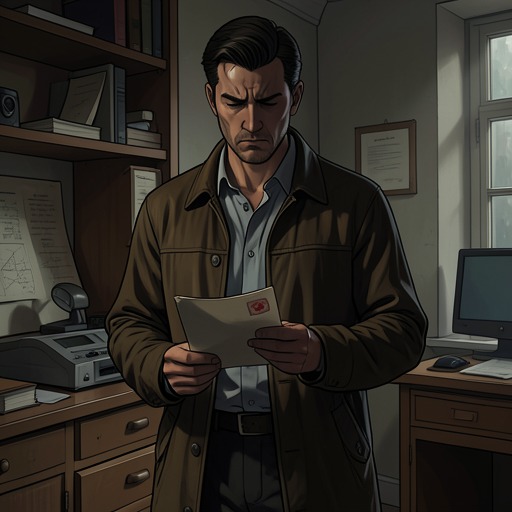
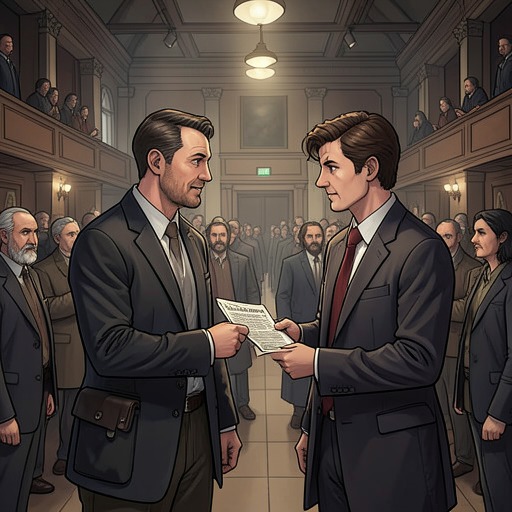
This is how the entire course of a life can be changed—by doing nothing
On Chesil BeachThis is how the entire course of a life can be changed—by doing nothing names the novel’s final recognition: Edward’s silence on Chesil Beach turns a moment of possible reconciliation into a loss that shapes the rest of his life. The expression links a small, reversible action he did not take to the immense, irreversible consequences he later imagines.
The Expression in Context
Decades after the wedding-night rupture, Edward is still hiking in his sixties. His routes take him through familiar countryside near Pishill, where forks in woodland paths and a view over the Stonor valley prompt him to imagine Florence stopping to consult her map or eat an orange during the August walk when she was trying to find him. These places make the past feel close, but the distance between them remains measured in years and in the choice he failed to make.
His reflections sharpen into recognition. He admits that he has never loved anyone as much or found anyone whose seriousness matched Florence’s. He wonders whether staying with her might have made him more focused and ambitious, perhaps even leading him to write the history books he once considered. Such possibilities remain conjecture; what he can see clearly is the decision that closed them off.
The Silence That Changed a Life
Edward looks back on Florence’s proposal to separate and understands that its terms were not what she truly needed. In his later interpretation, she needed certainty of his love and reassurance that they did not have to hurry when a lifetime lay ahead. He imagines that love and patience might have carried them through their difficulties, and wonders what children might have been born into the life they did not share. The expression gathers these counterfactual futures into the consequence of one omission.
At the decisive moment on Chesil Beach, Edward could have called out or gone after Florence. Instead, he stands in what the narration describes as cold and righteous silence, watching her hurry away. He does not know that, as she runs, distressed and certain she is about to lose him, she has never loved him more; hearing his voice would have been a deliverance, and she would have turned back. The tragedy lies in the gap between what each believes and what a single call might have changed.
Memory and Retrospective Meaning
The phrase is not merely a general maxim about passivity. It is Edward’s belated measure of a particular failure: he had the opportunity to answer Florence’s distress but did nothing, and only later understands the love and fear concealed within her departure. The narration gives the missed action its force by setting the imagined alternative—a call, a turn back, a shared lifetime—against the actual ending, in which he remains still.
Edward also chooses how to preserve what he lost. He knows that the Ennismore Quartet has become eminent, yet avoids its concerts and recordings, and does not want to see Florence’s photograph or learn the details of her life. He keeps instead the remembered image of the girl with a violin, a dandelion in her buttonhole, velvet in her hair, and a canvas bag over her shoulder. The closing reflection therefore joins regret to remembrance: the past remains vivid, but its unrealized future cannot be recovered.